Events
Meeting of Representatives of Nordic and Baltic Young Academies in Riga
15 05 2026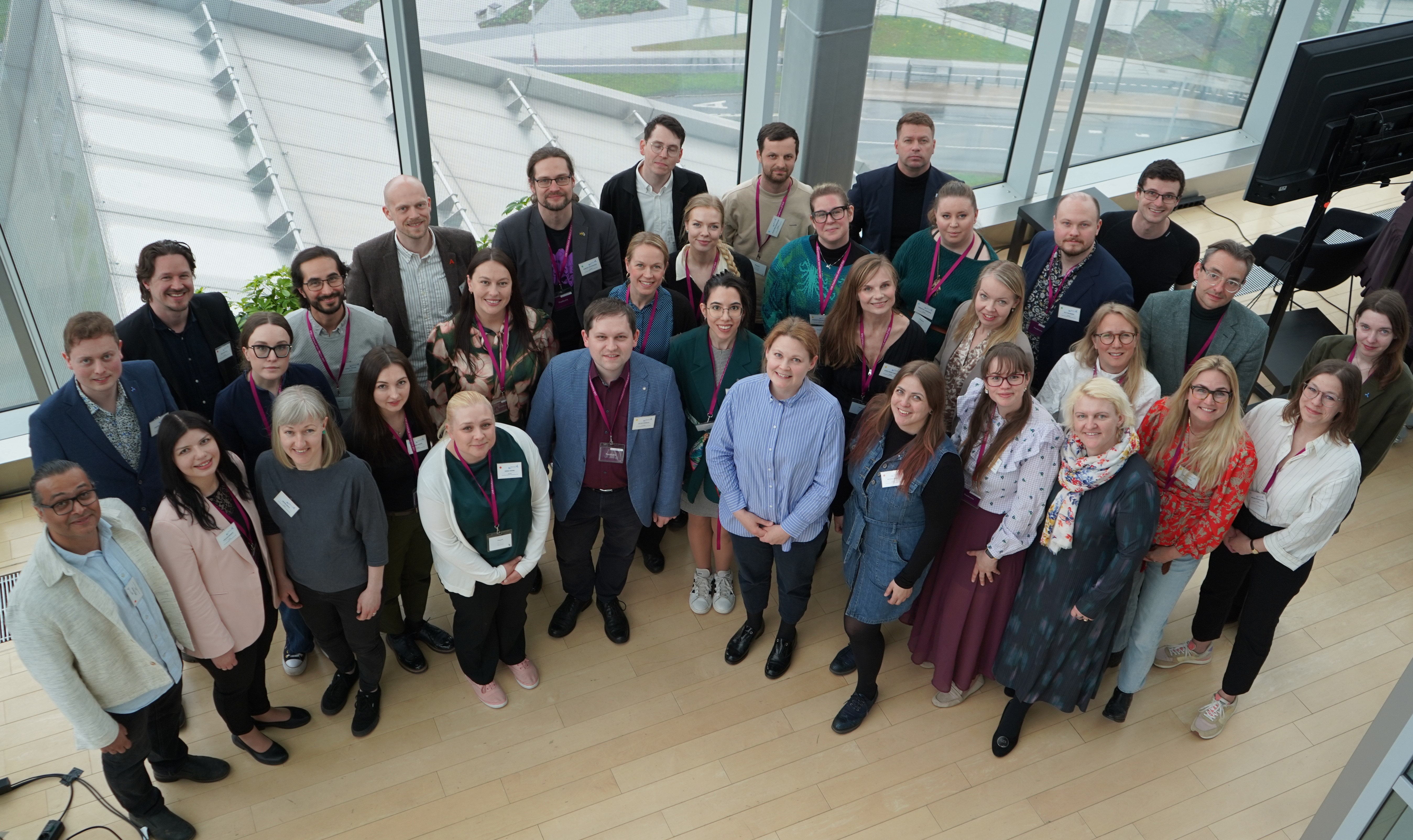
On 12–13 May, four members of the Young Academy of the Lithuanian Academy of Sciences (LMAJA, Lietuvos mokslų akademijos Jaunoji akademija) – Chair Dr Julius Vengelis, Vice-Chair Dr Gražina Korvel, LMAJA members Dr Meda Andrijauskienė and Dr Andrius Tamošiūnas – participated in the meeting of the Nordic and Baltic Young Academies organised by the Latvian Association of Young Researchers in Riga, Latvia. Representatives from the young academies of Lithuania, Latvia, Estonia, Denmark, Norway, Finland, and Sweden took part in this event. The main topics of this year’s meeting were academic ethics and freedom, as well as science for security and resilience.
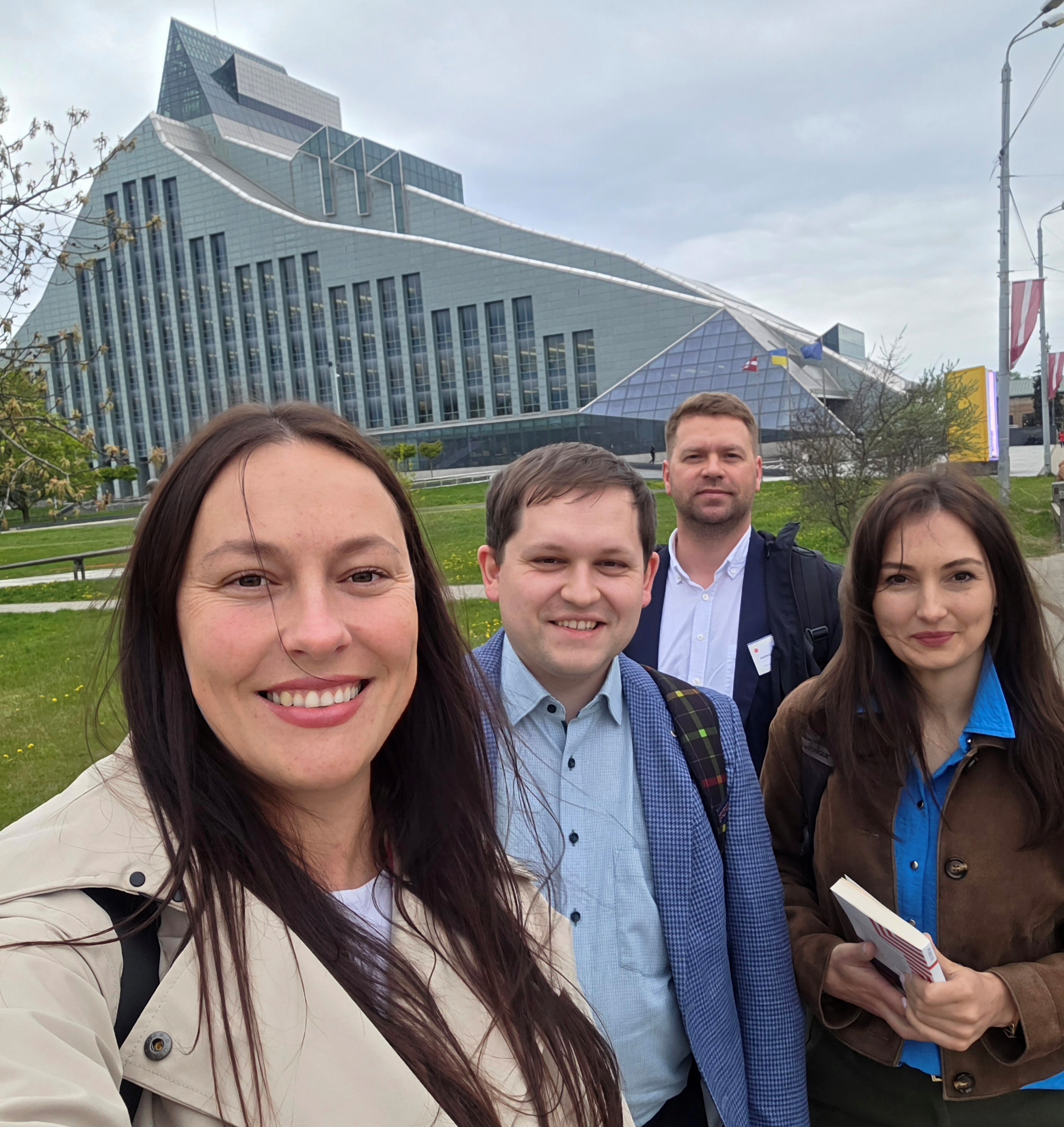
The LMAJA delegation at the meeting of the representatives of the Nordic and Baltic young academies in Riga, Latvia. Left to right, Dr Meda Andrijauskienė, Dr Julius Vengelis, chair of LMAJA, Dr Andrius Tamošiūnas, and Dr Gražina Korvel, vice chair of LMAJA
The first day of the meeting was dedicated to discussing science for security and resilience. The session began with a keynote presentation by Prof. Gundars Bērziņš, a member of the Latvian Academy of Sciences and the rector of the University of Latvia, on ethical challenges related to science for security resilience. Further on, speakers from the young academies further explored this topic by discussing various aspects of security – from food security to monitoring environmental contamination related to chemical substances. Among the speakers was also Dr Andrius Tamošiūnas, a LMAJA member, who delivered the presentation ‘Waste-to-X concept for increasing local energy security and resilience’.
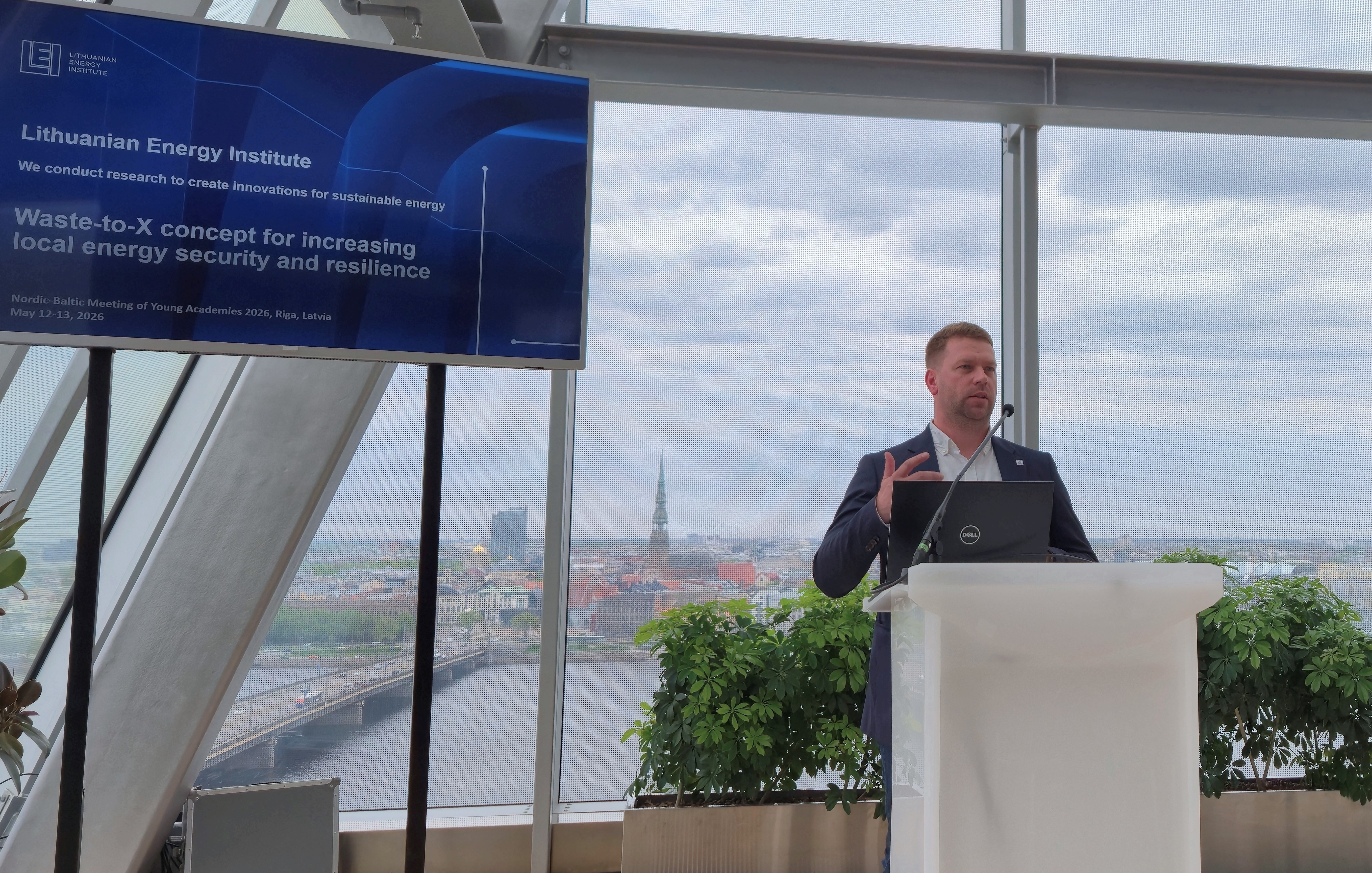
Dr Andrius Tamošiūnas, a LMAJA member, presenting a report on waste incineration technologies and their application for increasing energy security and resilience
The second day of the event opened with introductions of each young academy and updates on their latest activities, as well as discussions on academic ethics and freedom. Dr Julius Vengelis, the chair of LMAJA, introduced the Young Academy of the Lithuanian Academy of Sciences and this year’s initiatives.
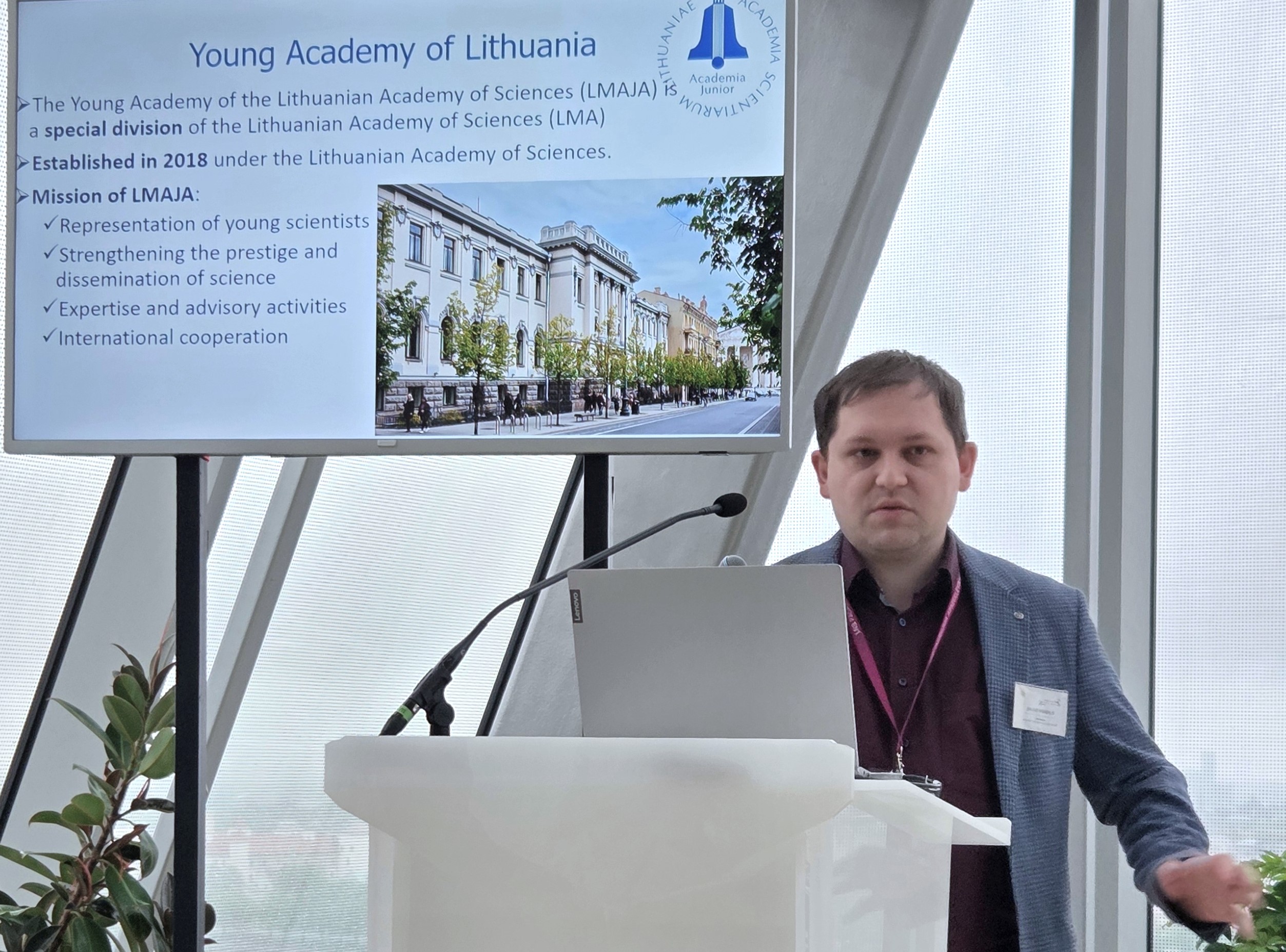
Dr Julius Vengelis, the chair of LMAJA introducing LMAJA and its activities
A keynote talk on threats to academic freedom was delivered by Prof. Sanita Osipova, a judge of the Constitutional Court of Latvia . Afterwards, a four-part roundtable workshop on academic ethics took place. Participants formed four groups that rotated to discuss different aspects of academic ethics. One part of the workshop (Where should we draw the line between support and misuse of AI in research?) was moderated by the LMAJA member Dr Meda Andrijauskienė. During the discussions, participants shared good practices and experiences from different countries in addressing challenges related to this topic. The summary of the results of these discussions will be published by the Latvian Association of Young Researchers.
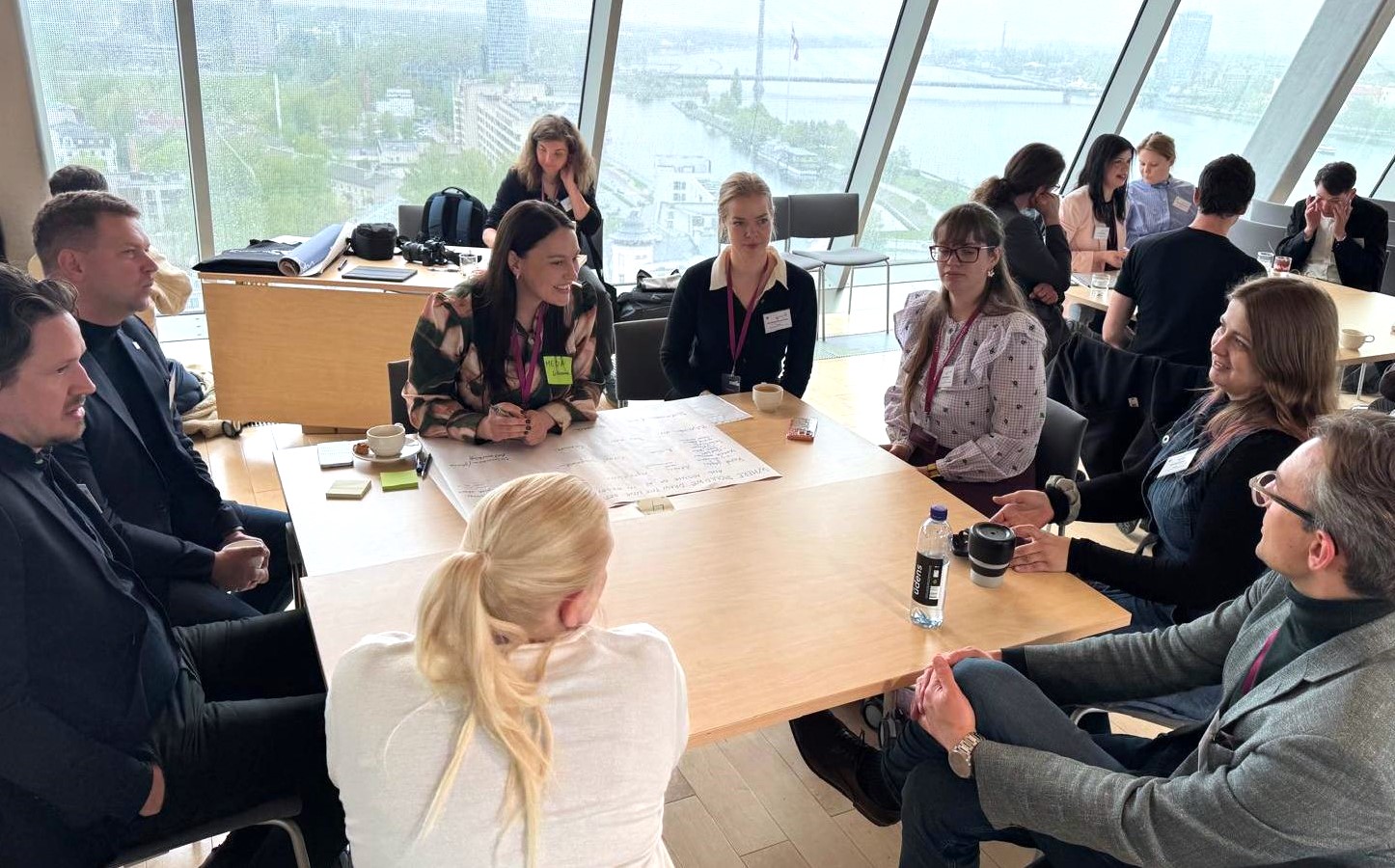
Roundtable discussions
In the final part of the meeting, a keynote presentation on the role of libraries in ensuring academic freedom was delivered by Dagnija Baltiņa, the director of the National Library of Latvia . It was followed by a panel discussion with the representatives of the young academies (Oskars Teikmanis, Christoffer Basse Eriksen, Guro Nore Fløgstad, and Juan Carlos Rocha Gordo) on defending academic freedom in democratic societies, in which LMAJA members also actively participated.
At the end of the event, details regarding the organisation of next year’s meeting, which will take place in one of the Nordic countries, were discussed. It was also agreed that the 2028 meeting of the Nordic and Baltic Young Academies will be held in Vilnius. Participation in this meeting strengthened regional cooperation among the Nordic and Baltic Young Academies and provided LMAJA members with valuable experience and knowledge as well as ideas for new initiatives.
Dr Julius Vengelis, chair of the Young Academy of the Lithuanian Academy of Sciences
Photos by Dr Meda Andrijauskienė, Dr Gražina Korvel, and Dr Julius Vengelis


